



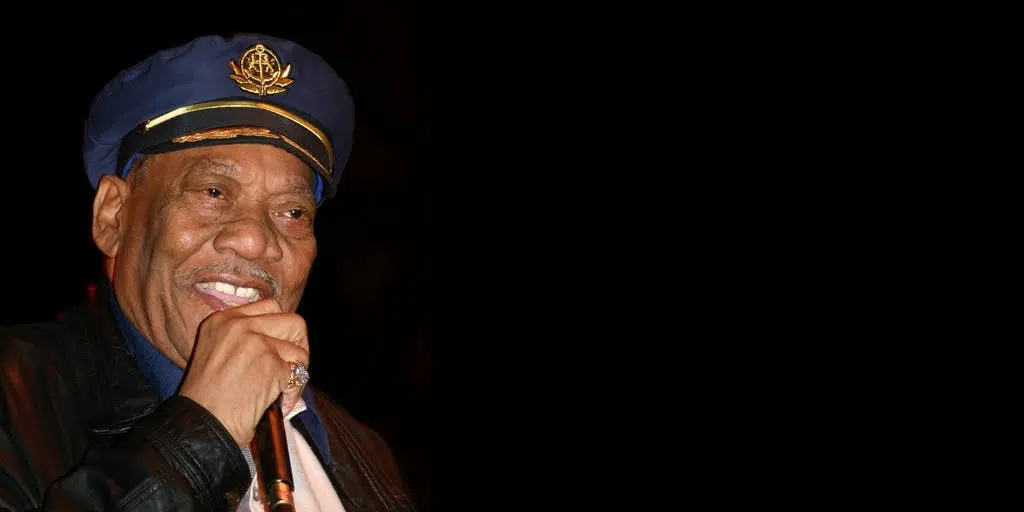
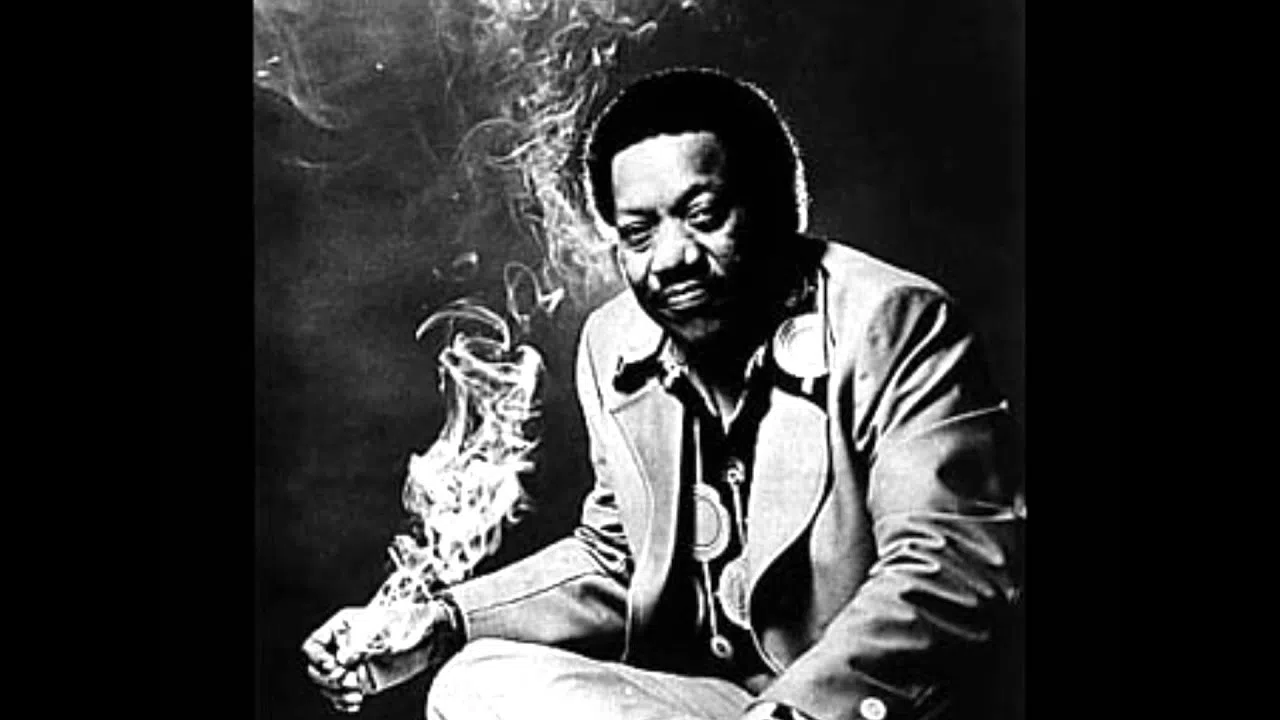
 Robert Calvin Bland (born Robert Calvin Brooks; January 27, 1930 – June 23, 2013), known professionally as Bobby “Blue” Bland, was an American blues singer.
Bland developed a sound that mixed gospel with the blues and R&B.[1] He was described as “among the great storytellers of blues and soul music… [who] created tempestuous arias of love, betrayal and resignation, set against roiling, dramatic orchestrations, and left the listener drained but awed.”[2] He was sometimes referred to as the “Lion of the Blues” and as the “Sinatra of the Blues”.[3] His music was also influenced by Nat King Cole.[4]
Bland was inducted into the Blues Hall of Fame in 1981, the Rock and Roll Hall of Fame in 1992, and the Memphis Music Hall of Fame in 2012.[5] He received the Grammy Lifetime Achievement Award in 1997.[6] The Rock and Roll Hall of Fame described him as “second in stature only to B.B. King as a product of Memphis‘s Beale Street blues scene”.[3]
Financial pressures forced the singer to cut his touring band and in 1968 the group broke up. He suffered from depression and became increasingly dependent on alcohol,[1] but he stopped drinking in 1971. His record company, Duke Records, was sold to the larger ABC Records group. This resulted in several successful and critically acclaimed contemporary blues and soul albums including His California Album and Dreamer, arranged by Michael Omartian and produced by ABC staffer Steve Barri. The albums, including the later “follow-up” in 1977, Reflections in Blue, were recorded in Los Angeles and featured many of the city’s top session musicians at the time.
The first single released from His California Album, “This Time I’m Gone for Good” took Bland back into the pop Top 50 for the first time since 1964 and made the R&B top 10 in late 1973. The opening track from Dreamer, “Ain’t No Love in the Heart of the City“, was a strong R&B hit. A version of it was released in 1978 by the hard-rock band Whitesnake, featuring the singer David Coverdale. Much later it was sampled by Kanye West on Jay-Z‘s hip-hop album The Blueprint (2001). The song is also featured on the soundtrack of the crime drama The Lincoln Lawyer (2011), starring Matthew McConaughey.[20] The follow-up, “I Wouldn’t Treat a Dog” was his biggest R&B hit for some years, climbing to number 3 in late 1974, but as usual his strength was never the pop chart (on which it reached number 88). Subsequent attempts at adding a disco flavor were mostly unsuccessful. A return to his roots in 1980 for a tribute album to his mentor Joe Scott, produced by music veterans Monk Higgins and Al Bell, resulted in the album Sweet Vibrations, but it failed to sell well outside of his traditional “chitlin circuit” base.
In 1985, Bland signed a contract with Malaco Records, specialists in traditional Southern black music, for which he made a series of albums while continuing to tour and appear at concerts with B. B. King. The two had collaborated on two albums in the 1970s. Despite occasional age-related ill health, Bland continued to record new albums for Malaco and perform occasional tours alone, with the guitarist and producer Angelo Earl and also with B. B. King, and performed at blues and soul festivals worldwide. In 1985, the album Members Only on Malaco reached number 45 on Billboard’s R&B albums chart, and the title song reached number 54 for R&B singles. It was his last chart single, and became Bland’s signature song for the rest of his career. Bland was inducted into the Rock and Roll Hall of Fame in 1992. The Rock and Roll Hall of Fame described him as “second in stature only to B. B. King as a product of Memphis’s Beale Street blues scene”.[3]






















Comments