



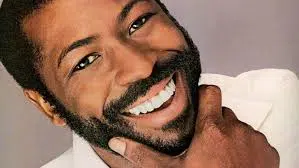
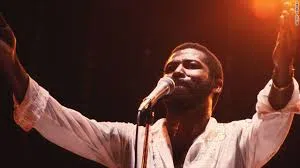
Theodore DeReese Pendergrass (March 26, 1950 – January 13, 2010) was an American singer. Born and raised in Kingstree, South Carolina, Pennsylvania, he initially rose to musical fame as the lead singer of Harold Melvin & the Blue Notes. After leaving the group in 1976, Pendergrass launched a successful solo career under the Philadelphia International label, releasing five consecutive platinum albums (a record at the time for an African-American R&B artist). Pendergrass’s career was suspended after a March 1982 car crash left him paralyzed from the shoulders down. Pendergrass continued his successful solo career until announcing his retirement in 2007. Pendergrass died from respiratory failure in January 2010.
In 1972, Harold Melvin and the Blue Notes released their first single, a slow, solemn ballad entitled “I Miss You”. The song was originally written for The Dells, but the group passed on it. Noting how Pendergrass sounded like Dells lead singer Marvin Junior, Kenny Gamble decided to build the song with Pendergrass, who was only 21 at the time of the recording. Pendergrass sings much of the song in a raspy baritone voice[2] that would become his trademark. The song also featured Blue Notes member Lloyd Parks singing falsetto in the background and spotlighted Harold Melvin adding in a rap near the end of the song as Pendergrass kept singing, feigning tears. The song, one of Gamble and Huff’s most creative productions, became a major rhythm and blues hit and put the Blue Notes on the map. The group’s follow-up single, “If You Don’t Know Me by Now“, brought the group to the mainstream with the song reaching the top 10 of the Billboard Hot 100, while also reaching number one on the soul no. 1 singles chart. Like “I Miss You” before it, the song was originally intended for a different artist, fellow Philadelphian native Patti LaBelle and her group Labelle but the group could not record it due to scheduling conflicts. Pendergrass and LaBelle developed a close friendship that would last until Pendergrass’s death.
The group rode to fame with several more releases over the years including “The Love I Lost“, a song that predated the upcoming disco music scene, the ballad “Hope That We Can Be Together Soon“, and socially conscious singles “Wake Up Everybody” and “Bad Luck“. One of the group’s notable singles was their original version of the Philly soul classic “Don’t Leave Me This Way“, which turned into a disco smash when Motown artist Thelma Houston released her version in 1976. By 1975, Pendergrass and Harold Melvin were at odds, mainly over financial issues and personality conflicts. Despite the fact that Pendergrass sang most of the group’s songs, Melvin was controlling the group’s finances. At one point, Pendergrass wanted the group to be renamed “Teddy Pendergrass and the Blue Notes” because fans kept mistaking him for Melvin.[citation needed] Pendergrass left the group in 1975, and the Blue Notes struggled with his replacements. They eventually left Philadelphia International and toiled in relative obscurity, until Melvin’s death in 1997. As of 2014, a version of the group still tours the old school circuit, performing as Harold Melvin’s Blue Notes.
Pendergrass got well-wishes from thousands of his fans during his recovery. In August 1982, Philadelphia internationally released This One’s for You, which failed to chart successfully, as did 1983’s Heaven Only Knows. Both albums included material Pendergrass had recorded before the crash. The albums completed his contract with Philadelphia International. By the time Pendergrass decided to return to the studio to work on new music he had struggled to find a recording deal. Eventually signing a contract with Asylum Records and completing physical therapy, he released Love Language in 1984. The album included the pop ballad “Hold Me“, featuring a then-unknown Whitney Houston. It reached No. 38 on the Billboard album chart and was certified Gold by the RIAA.
On July 13, 1985, Pendergrass made an emotional return to the stage at the historic Live Aid concert in Philadelphia in front of a live audience of over 99,000 and an estimated 1.5 billion television viewers.[8] It was the 35-year-old’s first live performance following the accident. Pendergrass tearfully thanked the audience for keeping him in their well-wishes and then performed the Diana Ross song “Reach Out and Touch (Somebody’s Hand)“. In 1988, Pendergrass scored his first R&B number-one hit in nearly a decade when the song “Joy”, from his album of the same name, was released. A video of the song enjoyed heavy rotation on BET. It was also his final Hot 100 charted single, peaking at number 77. The album was certified Gold by the RIAA that same year. Also, Pendergrass’s voice was heard on the jingles of a then local Philadelphia radio station, WSNI-FM. Pendergrass kept recording through the 1990s. One of the singer’s last hits was the hip-hop leaning “Believe in Love”, released in 1994. In 1996, he starred alongside Stephanie Mills in the touring production of the gospel musical Your Arms Too Short to Box with God.[9] In 1998, Pendergrass released his autobiography entitled Truly Blessed.[10]
Pendergrass did a concert at the Wiltern Theater in Los Angeles on February 14, 2002, entitled “The Power of Love”. The concert became the album From Teddy, With Love, which was released on the Razor & Tie record label later that year. It was his second (after Live! Coast to Coast) and final live album. Clips of the concert, in particular his performance of his comeback song “Joy” can still be seen on YouTube.[11] In his later years, Pendergrass’s “Wake Up Everybody” has been covered by a diverse range of acts from Simply Red to Patti LaBelle and was chosen as a rallying cry during the 2004 Presidential campaign by Kenneth “Babyface” Edmonds to mobilize voters. In addition, Little Brother, Kanye West, Cam’ron, Twista, Ghostface, Tyrese Gibson, 9th Wonder, DMX and DJ Green Lantern have utilized his works.
In 2006, Pendergrass announced his retirement from the music business.[12] In 2007, he briefly returned to performing to participate in Teddy 25: A Celebration of Life, Hope & Possibilities, a 25th anniversary awards ceremony that marked Pendergrass’s crash, but also raised money for his charity, The Teddy Pendergrass Alliance, and honored those who helped Pendergrass since the accident.[13]






















Comments